
What Probate Covers in George County
Probate is the court process for settling what a person leaves behind. In George County it falls under Chancery Court, the equity side of the local court system. Chancery Court hears estates of decedents, land issues, domestic and family matters, mental commitments, and equity appeals from County Court. Estates, wills, guardianships, and conservatorships all move through this venue. The word chancery simply means equity, so these judges weigh fairness rather than guilt.
Three judges sit on the Chancery Court bench for this area: Ashlee Cole, Mark Maples, and Neil Harris. The daily files, though, are kept by the Chancery Clerk. The clerk is the county's official record keeper and handles estates, wills, guardianships, conservatorships, and the land records that often tie to an inheritance. A probate matter usually opens when someone files a petition to start an estate or to be named guardian. The court then supervises each step until the estate closes or the guardianship ends.
The Chancery Clerk's role as record keeper is described on the county's official Chancery Clerk page, which names Cammie Brannan Byrd and lists estates, wills, and guardianships among the office duties.
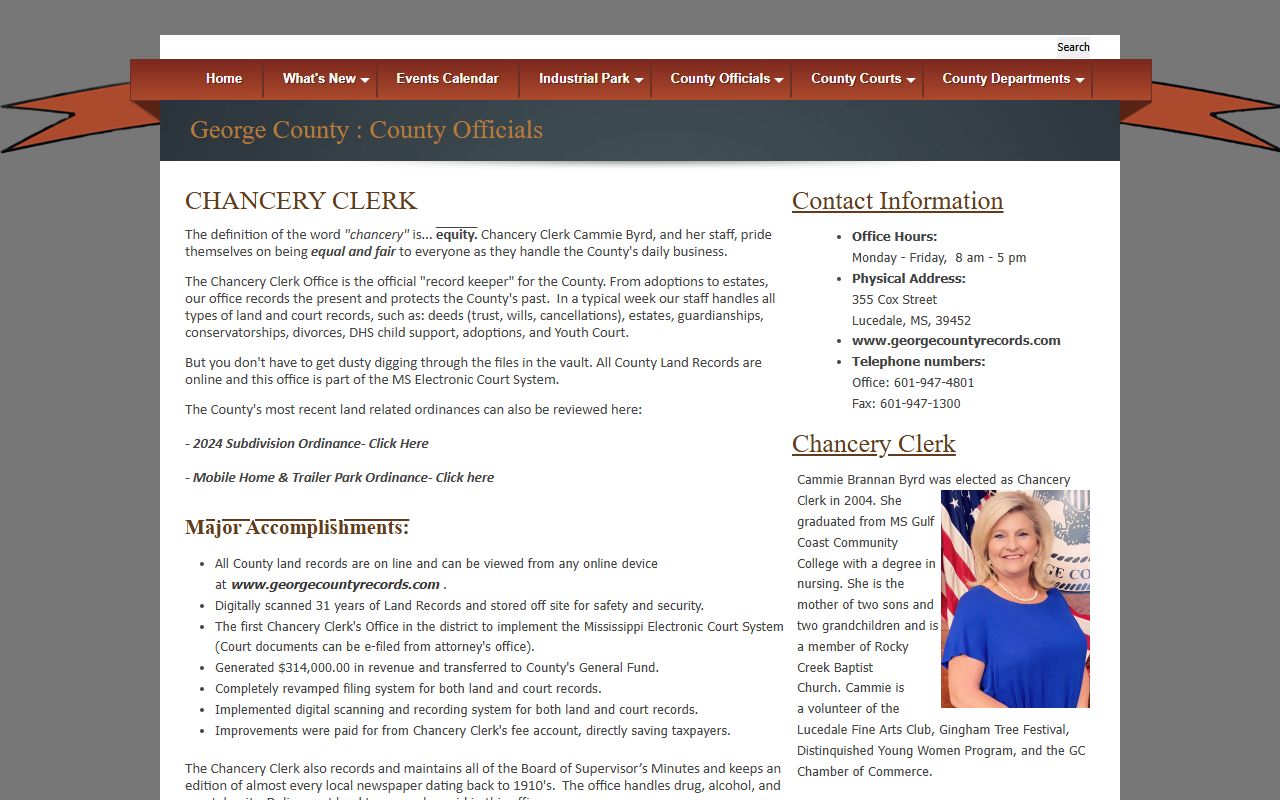
That same office stores the probate files and the county land records together, so a single visit can cover a will and the deed it affects.
Probate Terms Defined
Probate paperwork carries a set of legal words that show up again and again. Knowing a few of them makes a will or estate file far easier to read. The terms below appear in most George County estate and guardianship matters.
- Testator
- The person who made and signed the will.
- Executor
- The person named in a will to carry out its terms and settle the estate.
- Intestate
- Dying without a valid will, which leaves state law to decide who inherits.
- Guardianship
- Court-supervised care or decision-making for a minor or an incapacitated person.
- Conservatorship
- Court-supervised management of another person's property and finances.
What George County Probate Records Show
A probate file grows as the case moves along. It can start with a short petition and end with a full account of who received what. Most files blend court orders, sworn lists, and notices sent to family and creditors.
Records held in a George County probate matter may include the following:
- The estate petition or application that opens the case.
- The will filed for probate, when one exists.
- Letters testamentary or letters of administration naming who may act.
- Heirship and interested-party notices.
- An inventory and appraisement of estate assets.
- Creditor claims, creditor notices, and orders approving the sale or distribution of property.
- The final accounting and the order of discharge that closes the estate.
Guardianship and conservatorship files follow a similar shape, opening with a petition and tracking the orders that govern a minor or incapacitated person. Some estates also leave a mark in the land records, since a will or deed that affects real property is recorded on the land side too. Note: a recorded land instrument and a full probate case file are two different things, so always ask the clerk which one your situation needs.
How to Search George County Probate Records
George County has no single public probate case portal, and no statewide Mississippi system lists county probate files. The official channel is the Chancery Clerk, reached in person or by phone. The clerk's land-record portal helps only when a will, deed, or estate instrument has been recorded in land records, and that portal sits behind a paid subscription.
Mississippi's court system explains clerk and records roles in plain terms on the state Judiciary records and clerk FAQ page, a useful primer before you call the courthouse.
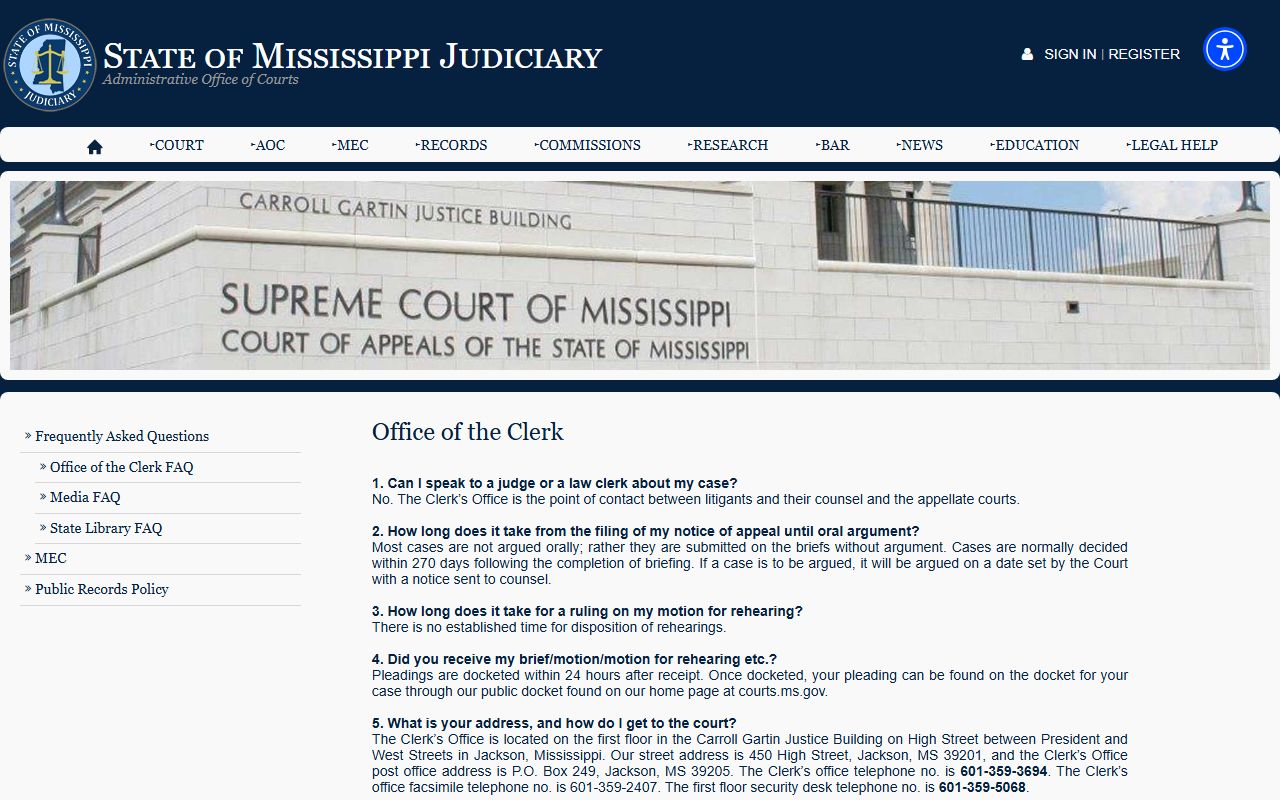
That state guidance backs up the local rule here: the probate file lives with the county clerk, not on a free open database.
The Chancery Clerk's office was the first in its district to join the Mississippi Electronic Court system, which lets attorneys e-file court documents from their own offices. That step modernized how cases reach the court, yet it did not turn probate files into a one-click public lookup. The land-record index that is online also comes with a clear warning: the version on the portal is not the official index, and the index kept inside the courthouse remains the controlling record. For that reason, a phone call or a counter visit is still the surest way to confirm what a probate or estate file holds.
A basic search of George County probate records runs through these steps:
- Call or visit the Chancery Clerk and give the name of the person who died or the protected party, plus an approximate date.
- Ask whether a probate or guardianship file exists and what it covers.
- If a will or land instrument was recorded, search the land-record index by name, book and page, instrument number, parcel, or legal description once you hold a subscription.
- Request plain or certified copies and ask which parts of the file, if any, are restricted.
Chancery Court and Chancery Clerk Contacts
Probate in George County runs out of one building. The Chancery Court and the Chancery Clerk share the courthouse at 355 Cox Street in Lucedale, and the court routes its address and phone through the clerk's office. The clerk's counter is where most people start an estate, file a will, or ask about a guardianship.
You can review the bench and the case types it hears on the county's official Chancery Court page, which sets out estates, land matters, and commitments.
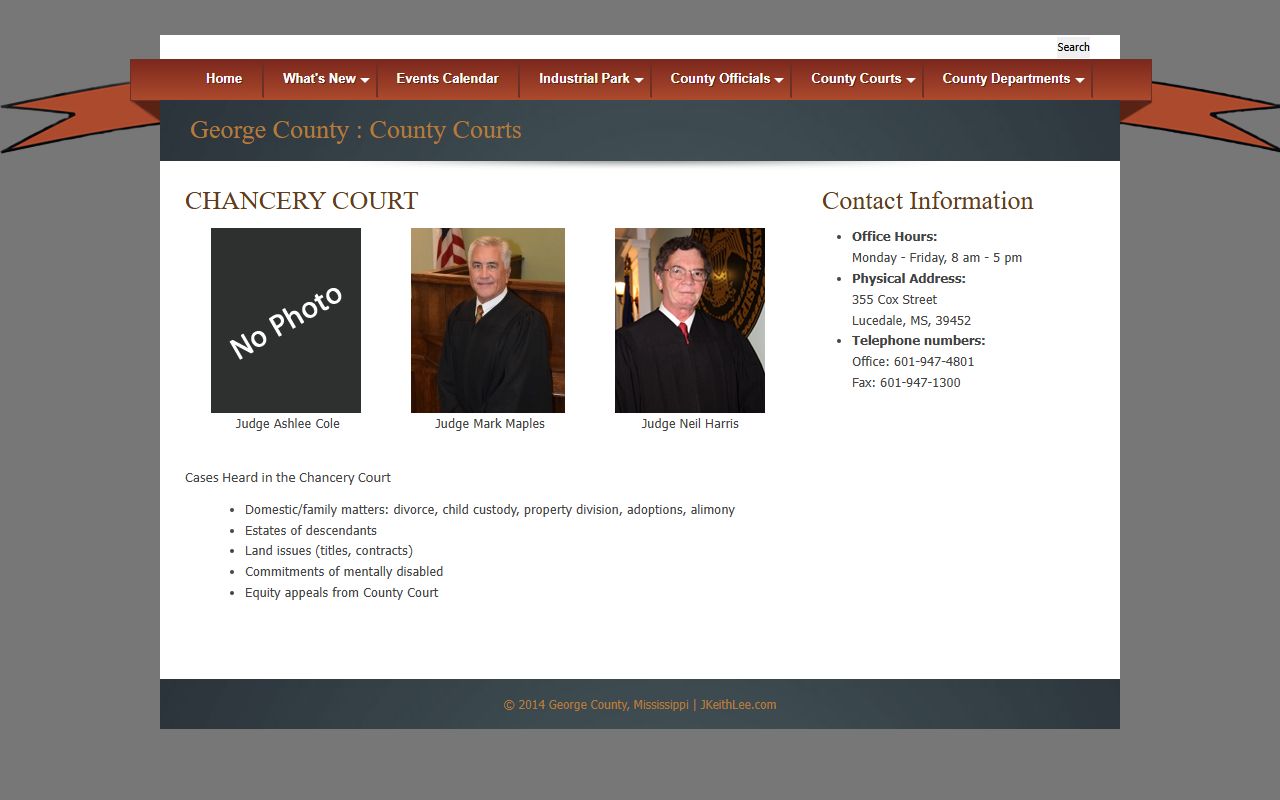
Use the contact blocks below to reach the right counter for an estate, a will, or a guardianship file.
George County Chancery Clerk
Cammie Brannan Byrd
355 Cox Street
Lucedale, MS 39452
601-947-4801
Fax 601-947-1300
Monday to Friday, 8 a.m. to 5 p.m.
George County Chancery Court
Judges Ashlee Cole, Mark Maples, Neil Harris
355 Cox Street
Lucedale, MS 39452
601-947-4801
Monday to Friday, 8 a.m. to 5 p.m.
George County Probate Filing Fees
George County does not publish a set probate fee list on its official pages. Filing and copy costs are real, but the exact amounts are not posted, so the honest answer is to confirm each charge with the Chancery Clerk at 601-947-4801. The one published figure tied to these records is the service fee on online land-record copies.
| Item | Amount |
|---|---|
| Estate or probate petition filing | Not published; confirm with clerk |
| Letters testamentary or administration | Not published; confirm with clerk |
| Plain or certified copy per page | Not published; confirm with clerk |
| Guardianship or conservatorship petition | Not published; confirm with clerk |
| Online land-record copy service fee | 3.5%, $2.00 minimum |
The land-portal service fee applies when you buy a recorded copy online by credit card, and the portal warns that those purchases are final and non-refundable. For anything filed at the counter, ask about accepted payment methods before you go.
How Probate Works Locally
Most George County estates follow a steady path from the first filing to the final order. The clerk keeps the file, and the Chancery Court judge signs off on the key steps. The sequence below reflects how a typical matter moves through the courthouse.
- Decide whether the matter is an estate, a will, a guardianship, a conservatorship, or a related land issue.
- Contact or visit the Chancery Clerk at the courthouse to confirm the right track.
- Ask whether a file already exists under the decedent or protected person's name and an approximate date.
- If a will or land instrument was recorded, search the land-record portal by name, book and page, instrument number, parcel, or legal description when subscription access is open to you.
- For copies, ask the clerk about plain and certified copy fees and whether any part of the file is restricted.
- To open an estate, confirm filing requirements and whether an attorney is needed, since the county does not post self-help probate forms.
A reader who actually needs a divorce decree or a marriage record should note that those sit at different counters; the county's marriage and divorce records guide maps that split.
Restricted George County Probate Records
Not every probate paper is open to the public. Mississippi's Public Records Act treats most court files as open for inspection, yet several probate-related categories are shielded by law. The Chancery Clerk will withhold or redact these even when the rest of a file is public.
Guardianship and conservatorship records often involve a minor or an incapacitated adult, so personal and financial details may be limited. Adoption files are confidential and are not open public records. Mental-health and commitment matters carry medical detail and stay restricted. Sealed estates and any record a judge has closed by order fall outside ordinary public access as well.
When a file is restricted, the clerk can usually tell you whether you qualify to view it as an heir, a party, or an attorney of record. For broader questions about how the county handles open and closed files, the general George County court records overview lays out the access rules. Always bring identification and any case or instrument number you already have.