
George County Arrest Records and Court Charges
An arrest record documents the arrest itself. It notes who made the arrest, when it happened, and the booking that follows when a person enters the county jail. In George County the Sheriff's Office handles this side of the process under Sheriff Mitchell Mixon. Booking detail, the current jail roster, and custody status live with the jail rather than with the court clerk. The arrest record is the starting point, not the legal accusation.
The court charge record begins when a prosecutor files the formal charges after arrest. Being booked does not by itself create a charge. A prosecutor reviews the case and decides what to file, and only then do the charges become part of the court file that the clerk maintains and tracks through the case. For the jail roster and booking side, the George County inmate records page covers the custody lookup. The full case file, pleas, and final outcome sit with the George County criminal court records.
How to Find George County Arrest Records and Charges
George County does not publish one unified online search that pulls every arrest and every charge into a single screen. The charges and their status appear in the relevant court file, and the booking detail appears in the jail roster. Because of that split, finding the full picture usually means checking more than one office. The steps below give the practical order most people follow.
- Decide which side you need: the arrest and booking detail, or the charges filed after arrest.
- For the charges, start with the clerk that holds the case. The Circuit Clerk keeps felony and circuit criminal files; Justice Court holds misdemeanors and felony preliminary hearings.
- Open the case by defendant name or case number and read the charge list line by line.
- Check each charge for its statute code, its level, and its current status, since a charge can change after it is filed.
When the record you want is a Sheriff document rather than a court file, the office uses a formal request process. The Sheriff's records request procedure sets out how accident reports, incident records, and similar items are released.
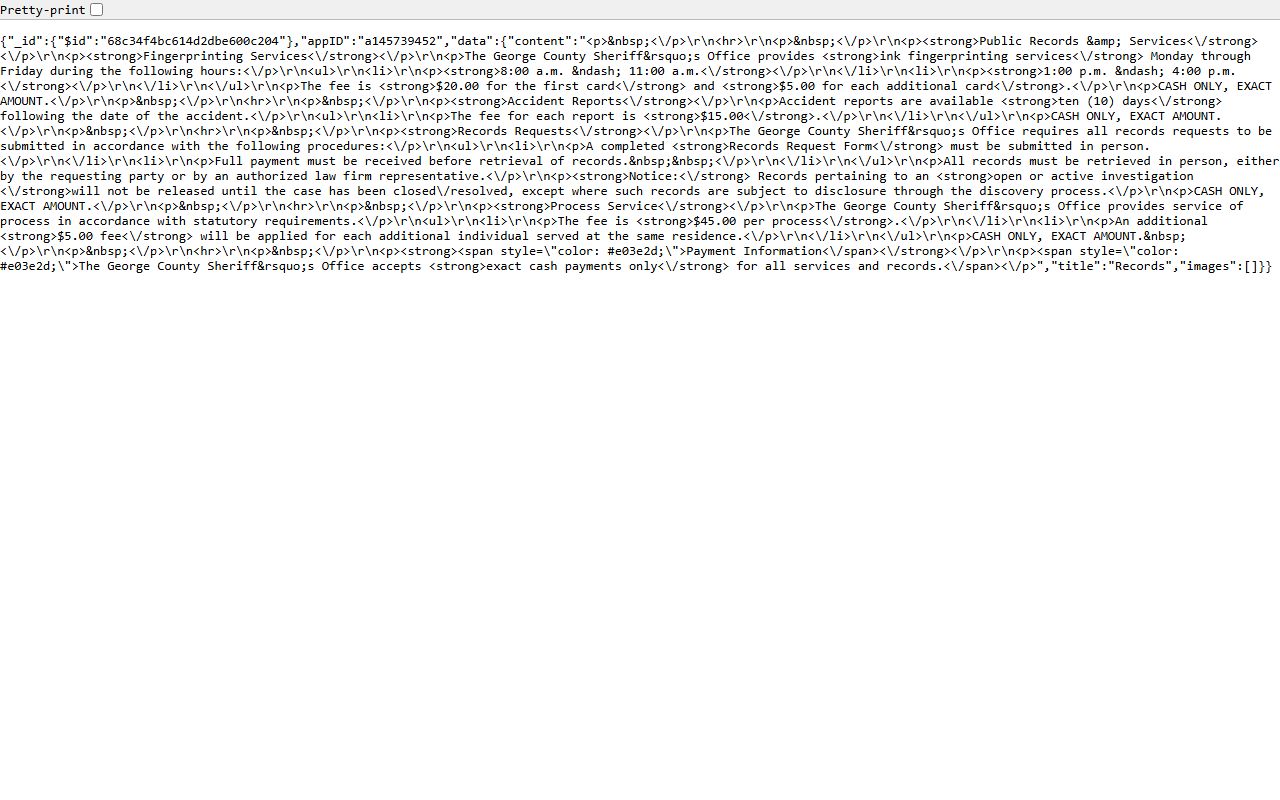
The procedure requires a completed Records Request Form submitted in person, full payment before the record is pulled, and pickup by the requester or an authorized law-firm representative. Records tied to an open or active investigation are held back until the matter is closed or resolved, except where they must be released through discovery. Payment for fingerprinting, accident reports, and process service is exact cash only.
Who Files Charges After a George County Arrest
Two prosecuting offices decide charges in George County, and which one acts depends on the level of the offense. Misdemeanors, preliminary matters, and many citation cases run through the County Prosecuting Attorney. Felonies are prosecuted by the District Attorney for the 19th Judicial District, which covers Jackson, George, and Greene counties. The clerk records the charges, but the prosecutor chooses them.
The George County Prosecuting Attorney represents the state in Justice and County Courts, handling felony investigations and preliminary hearings, county court criminal cases, appeals to Circuit Court, and misdemeanors. The office also takes Highway Patrol cases, Wildlife and Marine Resources citations, DUI hardship matters, and liquor-license violations. It sits at 362 Summer Street, Lucedale, and can be reached at 601-947-6161.
The 19th Judicial District Attorney prosecutes all felonies in the district and reports handling 2,500 to 3,500 criminal cases per year on average. The main office line is 228-769-3045. The office runs a Pre-Trial Diversion Program at 228-769-3490, a Worthless Check Unit at 228-769-3234, and Victim Support Services at 228-769-3365. Diversion can change how a charge ends, so anyone tracking a felony charge may want to ask the office directly rather than assume an outcome from the docket alone.
Important: A prosecutor, not the arresting officer, decides the final charges, so the offense listed at booking may differ from what is later filed with the court.
How Charges Get Filed After an Arrest: Complaint, Information, and Indictment
The arrest comes first, at booking. The charge record begins a step later, when a prosecutor files a charging document with the court. That document is the formal accusation, and it sets the case in motion. Mississippi cases generally start with one of three charging documents, and the type signals how serious the matter is. In George County a felony often passes through a Justice Court preliminary hearing before it reaches Circuit Court, where a grand jury may return an indictment.
| Complaint | Information | Indictment | |
|---|---|---|---|
| Filed By | Officer / Prosecutor | Prosecutor | Grand Jury |
| Common For | Misdemeanors | Many felonies | Serious felonies |
| Starts | The case | The case | The case |
A complaint is the most common entry point for a misdemeanor or for an early charge that an officer or prosecutor sets out. An information is a charge the prosecutor files directly, used for many felonies. An indictment is returned by a grand jury and is the usual route for serious felonies heard in Circuit Court. The charge record names the document type, so reading it tells you where the case stands.
How George County Arrests and Charges Begin
Many charges trace back to a complaint, a patrol stop, or a tip that opens an investigation. The Sheriff's Office runs public reporting channels that feed that early stage. These tools do not produce a public charge record on their own, but they show how the front end of the arrest-to-charges pathway works in George County. Tips are reviewed, an investigation may follow, and a prosecutor decides whether charges are filed.
Residents can report a crime through the Sheriff's submit-a-tip form, hosted in the office's mobile app and web tools.
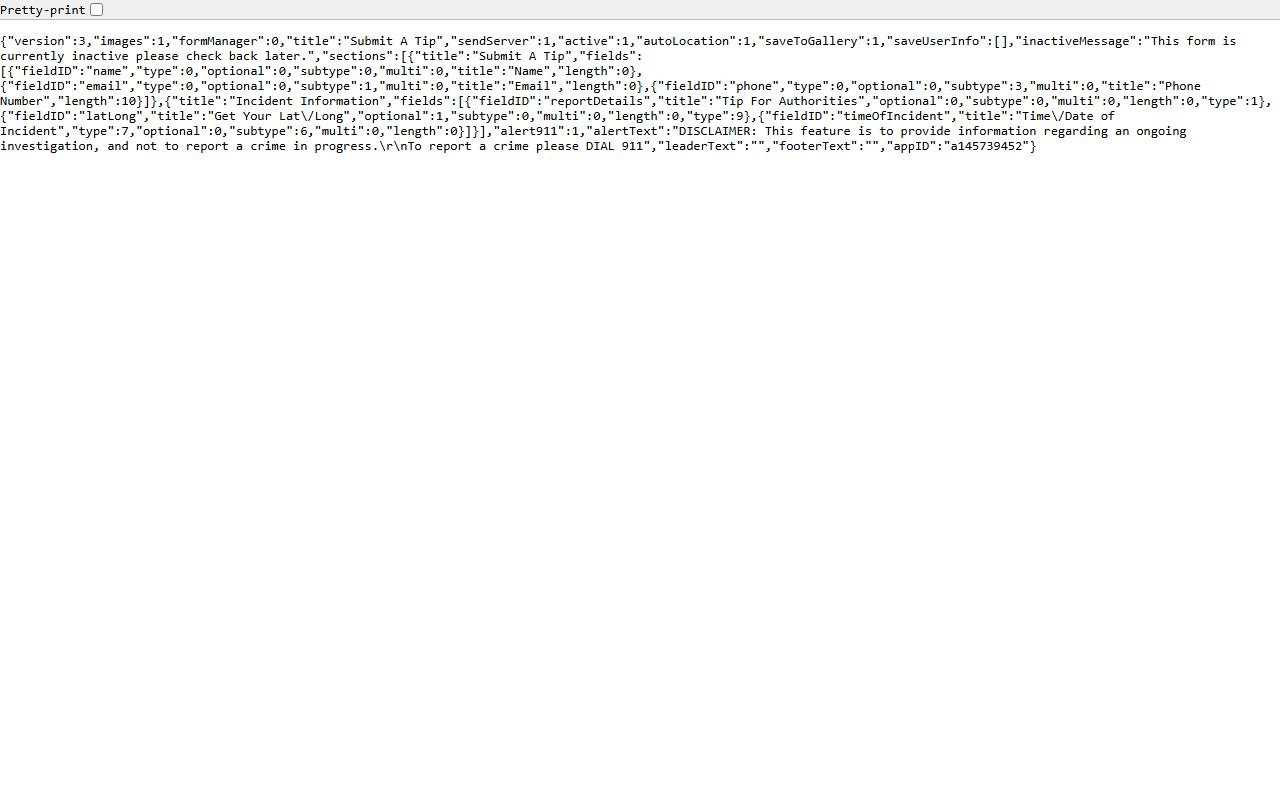
A tip can include details an investigator uses to build probable cause, which is the standard needed before an arrest or a charge. The office keeps a separate channel for drug activity. The Sheriff's narcotics-tip form routes that information to investigators who handle drug cases.
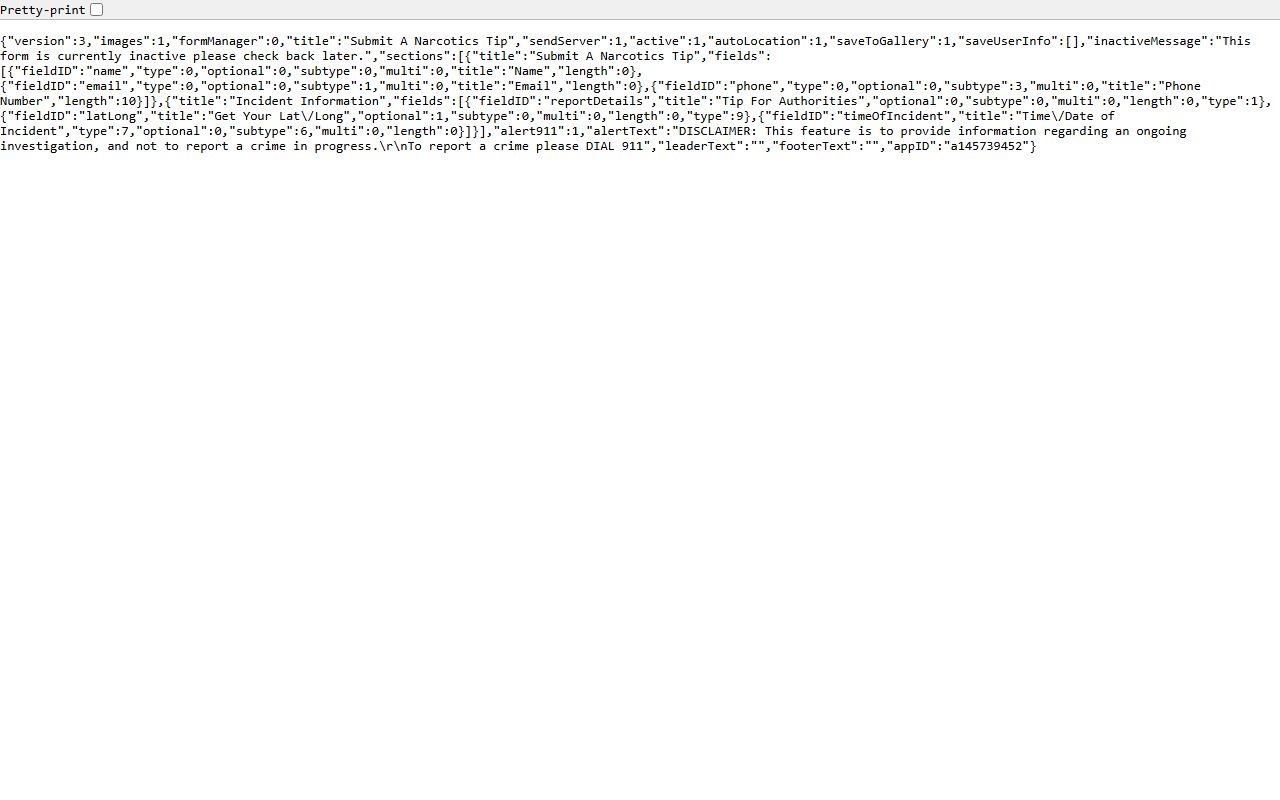
Narcotics complaints often lead to the kind of felony charges that move from arrest to a Justice Court preliminary hearing and then to Circuit Court. The tip itself stays with law enforcement. What becomes public is the charge filed afterward, not the report that started it.
Charge Status and What It Means
Charges are not fixed once they are filed. As a case moves, a charge can be amended, reduced, added, dropped, or dismissed. The status field on a charge record is one of the most useful parts of the file because it tells you where each count stands right now. Reading it correctly keeps you from treating an old or dropped charge as if it were still active.
| Status | What It Means |
|---|---|
| Pending | The charge has been filed and the case is still open and moving through the court. |
| Amended / Reduced | The charge was changed, often to a lesser offense, such as a felony lowered to a misdemeanor. |
| Dismissed | The court ended the charge without a conviction; a dismissal with prejudice usually cannot be refiled. |
| Nolle Prosequi | The prosecutor chose not to pursue the charge, dropping it without a finding of guilt. |
Nolle prosequi is a Latin term that simply means the state declines to prosecute. A reduced charge still appears in the record, with the original count and the lesser one both visible. Because a single status word can change the meaning of the whole entry, confirm the date next to it so you know it reflects the latest action.
Charge Codes and Severity Levels
Each charge ties to a statute, and the record lists that code along with a level. Mississippi sorts offenses into felonies, misdemeanors, and lesser violations. A felony is the most serious class and can carry a term in state custody. A misdemeanor is a lower-level offense usually handled in Justice or Municipal Court. The level controls which court hears the case and how the charge can resolve.
One arrest can produce several separate charges. A single incident may generate a felony count, a related misdemeanor, and a traffic violation, each with its own code and its own status. That is why a charge record often lists more than one line for the same booking. Reading every line matters, because charges can resolve differently even when they came from the same arrest. The statute number lets you confirm exactly what the state alleges rather than relying on the short label alone.
Charges vs. Convictions
Being charged is not the same as being convicted. A charge is an accusation that the state must still prove. A conviction is the result, reached by a guilty plea or a verdict. Many George County arrest records lead to charges that are later reduced, dismissed, or dropped, and those outcomes never become convictions. Treating a charge as a finding of guilt is a common and serious mistake.
| Charge | Conviction | |
|---|---|---|
| Stage | Accusation | Verdict or plea |
| Burden of Proof | Probable cause | Beyond reasonable doubt |
| Public Record | Yes | Yes |
Both a charge and a conviction can appear in public records, so a search may show either or both. The difference is the standard behind each one. A charge needs only probable cause to be filed. A conviction requires proof beyond a reasonable doubt. The disposition and sentence that follow a conviction are part of the full case file rather than the charge record alone.
Statewide Charge and Criminal History Lookups
Some charge-related information rolls up to statewide systems rather than staying only in the county file. Two of the most used are public registries that anyone can search, and both are run at the state and national level. They do not replace the court file, but they help cross-check a name when a charge involves a sex offense.
The Mississippi Department of Public Safety runs the state sex-offender registry, which supports search by offender name, by distance from an address, or by Mississippi ZIP code after the disclaimer is acknowledged.
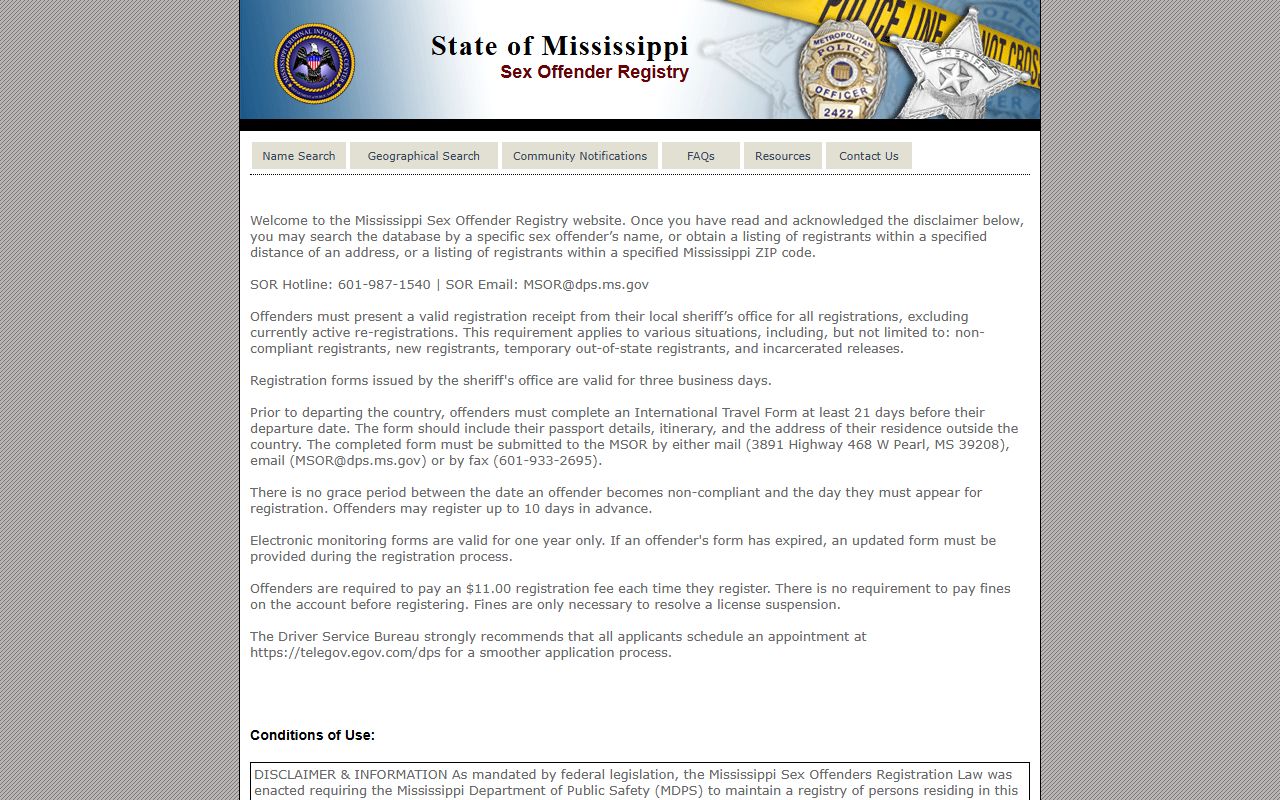
The registry is a public lookup separate from any single court case file. For a national view that reaches beyond Mississippi, the National Sex Offender Public Website searches participating state registries at once.
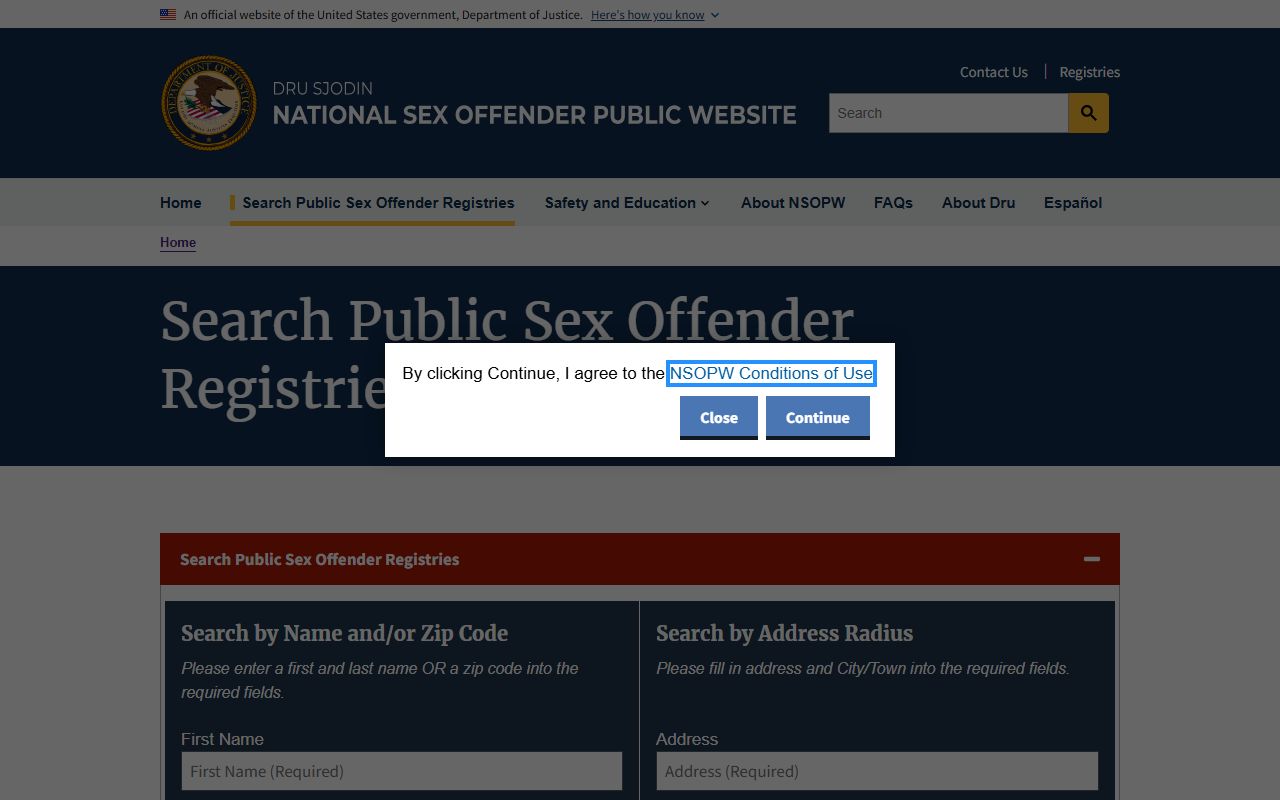
NSOPW is useful when a person has charges in more than one state. Both registries cover specific offense types only and are not a general criminal history report. For a complete criminal history, the court files and statewide records remain the official sources.
From Charge to State Custody
When a felony charge ends in a conviction and a prison sentence, custody moves out of the county jail and into the state system. The Mississippi Department of Corrections, not the George County jail, then holds the record of that custody. Tracking a charge all the way to its end can mean checking MDOC once a person is sentenced to state time.
The agency keeps a statewide inmate search and posts office details on its records and contact page.
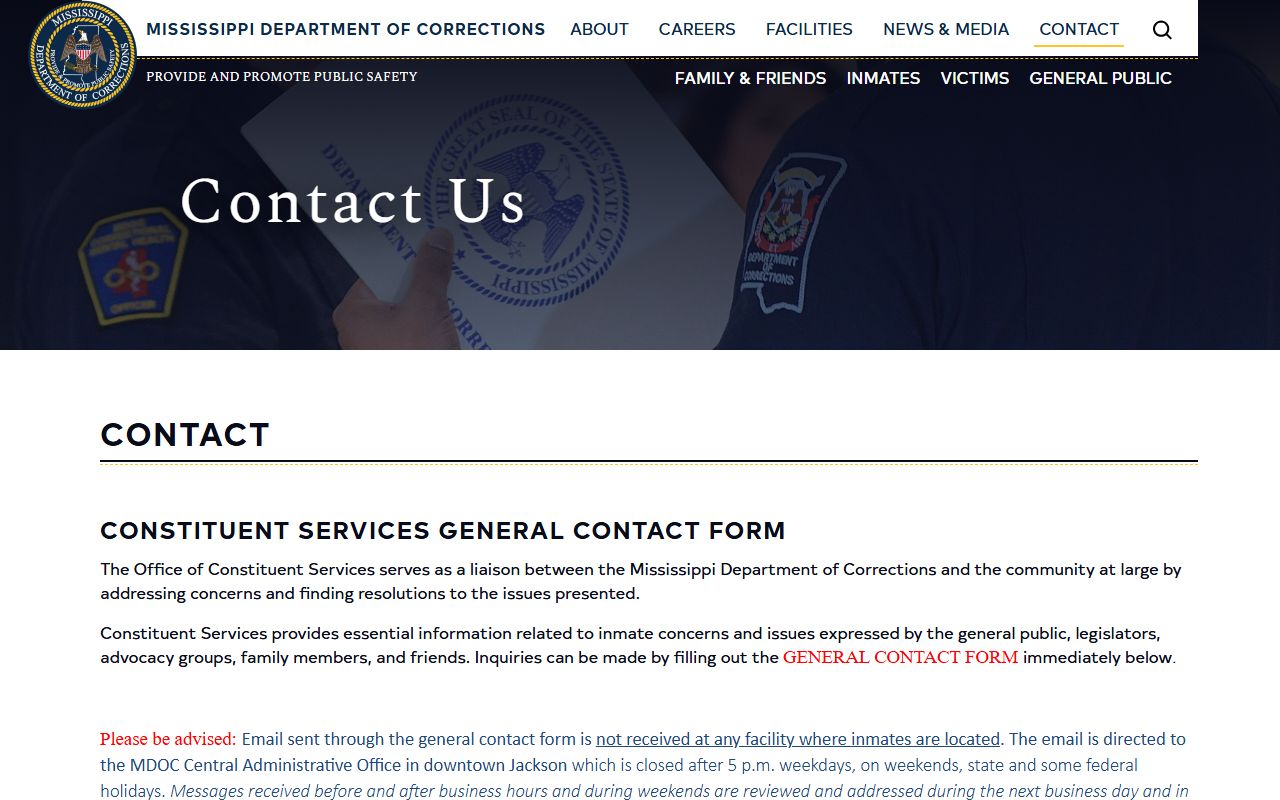
MDOC search lets users look up a person by name or by MDOC ID number. Use the county jail roster for people in local custody before or during a case, and use MDOC for those who have been sentenced into state custody. The charge record in the court file remains the anchor that connects the two.
Sealed vs. Expunged Records
Not every charge stays open to the public forever. Mississippi law lets some records be sealed or expunged, and the two are not the same. A sealed record is hidden from ordinary public view but still exists. An expunged record is cleared as though it never happened for most public purposes. Both require a court order, and the clerk does not remove a record just because someone asks at the counter.
| Sealed | Expunged | |
|---|---|---|
| Visibility | Hidden from public | Destroyed / treated as never existed |
| Law Enforcement | Limited access | Very limited |
| Eligibility | Set by court order in specific cases | First-offender misdemeanors, certain felonies, and dismissed or dropped cases under state law |
Mississippi's main expunction statute is Miss. Code Ann. Section 99-19-71. It covers first-offender non-traffic misdemeanors, certain felony convictions that meet the requirements, and cases where an arrest was made but the person was released and the matter was dismissed, dropped, or left with no disposition. The petition goes to the court that handled the case. After an expunction is granted, the record should no longer surface through ordinary public access.
Background Check Considerations
A casual name search is not the same as a formal background check. Public-record lookups can confirm whether charges exist and where a case stands, but they are not built for hiring, housing, or licensing decisions. Those uses fall under the federal Fair Credit Reporting Act, which sets rules for accuracy, consent, and dispute rights that ordinary record searches do not meet.
Important: This site is not a consumer reporting agency under the FCRA, and its information cannot be used for employment, tenant, credit, or other FCRA-regulated screening.
Restricted Charge Records in George County
Some charge records are kept out of public view by law. Youth Court matters involving people under 18, including delinquency and child-in-need-of-supervision cases, are confidential and are not ordinary public records. Sealed and expunged charges are removed from normal access once a court orders it. Charges tied to an open or active investigation are also withheld until the case is closed.
Public access in Mississippi runs through the Public Records Act, explained on the Mississippi Ethics Commission public records page, which says records are open to any person unless another law makes them exempt. That exception is what keeps juvenile, sealed, adoption, and open-investigation files closed. To request a charge record, start with the office that created it: the Circuit Clerk for circuit criminal files, Justice Court for misdemeanors and preliminaries, and the Sheriff for booking and investigation records.
Note: a charge that was dismissed or dropped may still appear in older public files until it is expunged by the court that handled the case.