
What a George County Court Docket Shows
A docket is the court's chronological list of everything that happens in a case. Each line marks an event: a complaint filed, a motion entered, a hearing set, an order signed, or a final judgment. Read top to bottom, the docket tells the story of a case from its opening number to its disposition. It is the index to the file, not the file itself.
The full case record is the stack of actual documents behind those lines. The docket might note "Motion to Dismiss filed," while the full record holds the motion, the brief, the exhibits, and the judge's written order. In George County the docket is what lets you track where a case stands; the complete file, with its pleadings and evidence, usually means a trip to the clerk's counter or a fee for copies.
Because George County divides its trial work by subject matter, dockets live in different courts. The Circuit Court hears felonies, misdemeanors, larger civil actions, and appeals from County Court. The Chancery Court handles divorce, custody, estates, guardianships, and land disputes. Justice Court and Lucedale Municipal Court set their own lower-level dockets. A name that returns nothing in one court may simply belong to another.
Where George County Court Dockets Actually Live
George County does not publish one unified public case search covering every court. The only official online records system is the Chancery Clerk's land-record portal, and that index covers recorded instruments such as deeds and trust deeds, not Circuit Court criminal or civil dockets. To find a docket, you go office by office, by phone or at the counter, depending on which court holds the matter.
Circuit Clerk Chad Welford is the starting point for Circuit Court criminal and civil dockets. The office publishes a 2026 Circuit Court calendar that lists term dates and settings, and it also keeps the judgment roll and collects criminal fines. The Chancery Clerk's office is part of the Mississippi Electronic Court system, known as MEC, and was the first Chancery Clerk's office in the district to implement MEC so attorneys can e-file court documents. Even so, the county does not expose a public George County MEC case-search form, so chancery docket questions still route through the clerk.
Lower-court dockets are set locally as well. Justice Court, run by Clerk Angela Edwards, handles small civil claims, misdemeanors, felony preliminary hearings, and many traffic citations from state and county agencies. Lucedale Municipal Court sets city police and ordinance matters. The practical channels look like this:
- Circuit Court dockets and the 2026 court calendar: Circuit Clerk, 601-947-4881.
- Chancery, divorce, probate, and guardianship settings: Chancery Clerk, 601-947-4801.
- Justice Court civil, misdemeanor, and traffic settings: Justice Court Clerk, 601-947-4834.
- Lucedale Municipal Court fines and city citations: Lucedale Police, 601-947-3261.
Because no countywide docket database exists, the clerk counters remain the reliable route for case settings and older files. The same clerks who maintain the dockets also handle the underlying George County court records, so a single call often answers both the calendar question and the file-copy question.
Note: The Chancery Clerk land portal indexes recorded land instruments only, so it will not return a Circuit Court criminal docket or a hearing date.
How to Check a George County Court Calendar
Checking a docket or calendar in George County works best when you know the court and have a case number or party name ready. The steps below follow the office-by-office map most local users take.
- Identify the court that hears your matter: Circuit, Chancery, County, Justice, or Lucedale Municipal. Felonies and larger civil suits sit in Circuit Court; family and estate cases sit in Chancery.
- For Circuit Court settings, open the Circuit Clerk's page and pull the 2026 Circuit Court calendar to confirm term dates and the trial week.
- Gather the case number, the parties' names, and the approximate filing year before you call or visit, since clerks search by these.
- Contact the matching clerk by phone, fax, or counter visit at 355 Cox Street to confirm the next setting, the judge, and the docket status.
- For the full file behind a docket line, ask the clerk about copy and certification charges, since dockets are free to view but documents may carry a fee.
The Circuit Clerk's staff sit at the front of the courthouse and routinely help visitors with directions and case questions, which makes a quick call the fastest way to verify a setting before a hearing date.
Sample George County Docket Entry Fields
A single docket line packs several pieces of information into one row. Circuit Clerk files commonly identify the case number, court, parties, filing date, charge or cause, docket entries, hearing dates, judge, and disposition. The table below breaks down the fields you are most likely to see when reviewing a George County court docket entry.
| Field | What It Shows |
|---|---|
| Case Number | The unique identifier the clerk assigns when the case opens. |
| Entry Date | The date the filing, hearing, or order was recorded on the docket. |
| Event Type | The action logged, such as complaint, motion, order, hearing, or judgment. |
| Party Filing | Which side acted, the plaintiff, defendant, petitioner, or respondent. |
| Hearing Date | The scheduled setting or trial week tied to the entry. |
| Judge | The Circuit or Chancery judge assigned to the matter. |
| Disposition | The outcome, such as dismissed, judgment entered, or sentence imposed. |
Justice Court dockets carry a slightly different mix, often a citation number, the officer or agency, the charge, a court date, fine, bond, and any failure-to-appear status. Reading these fields together tells you not just what happened but what is scheduled next.
Docket vs. Full Case File in George County
People often ask for "the docket" when they really need the full case file, and the two serve different jobs. The docket is a list of events you can scan in minutes. The full record is the set of documents that prove what each line means. The comparison below shows where each one helps.
| Docket | Full Case File | |
|---|---|---|
| Format | Dated list of entries | Complete documents and exhibits |
| Holds | Filings, hearings, orders by date | Pleadings, motions, briefs, evidence, signed orders |
| Access | View at the clerk counter or by phone | Counter request, copy and certification fees may apply |
| Best Use | Track case progress and next setting | Legal review, appeals, certified proof |
For a final court order, certified copies matter. An uncertified printout works to follow a case, but a certified copy from the clerk is what other courts and agencies accept as proof. The deeper case-file detail, including charging documents and sentencing, sits with the George County Circuit Court for law-side matters and with the Chancery Clerk for family and estate files.
George County Docket Terms Explained
Docket lines lean on shorthand and legal terms that can hide what really happened in a case. A motion is not an order, and a continuance is not a dismissal. The definitions below cover the words that appear most often on George County dockets so each entry reads clearly.
- Docket
- The chronological list of filings, hearings, and court actions in a case.
- Motion
- A written request asking the judge to take a specific action.
- Order
- The judge's written direction or decision on a matter.
- Continuance
- A postponement that moves a hearing or trial to a later date.
- Disposition
- The outcome of a criminal charge or civil case.
- Capias
- A warrant or order to take a person into custody after a court default.
- Bench Warrant
- A warrant a judge issues, often for failure to appear at a setting.
Disposition codes tell you whether a case is over. "Dismissed with prejudice" means the matter is closed and generally cannot be refiled, while "dismissed without prejudice" leaves the door open to refile. A bench warrant or capias on a docket signals that a defendant missed a required court date.
Federal Court Dockets for George County
Some George County matters are federal, not local, and those dockets live in a separate system entirely. George County sits in the U.S. District Court for the Southern District of Mississippi. Federal criminal cases, civil-rights suits, federal civil actions, and government enforcement matters are filed there rather than at the county courthouse. The Southern District runs its dockets through CM/ECF, the courts' electronic case-filing system.
The neighboring district keeps a clear case-information landing page worth knowing for context on how Mississippi federal dockets are organized, which the Northern District of Mississippi case-information page lays out.
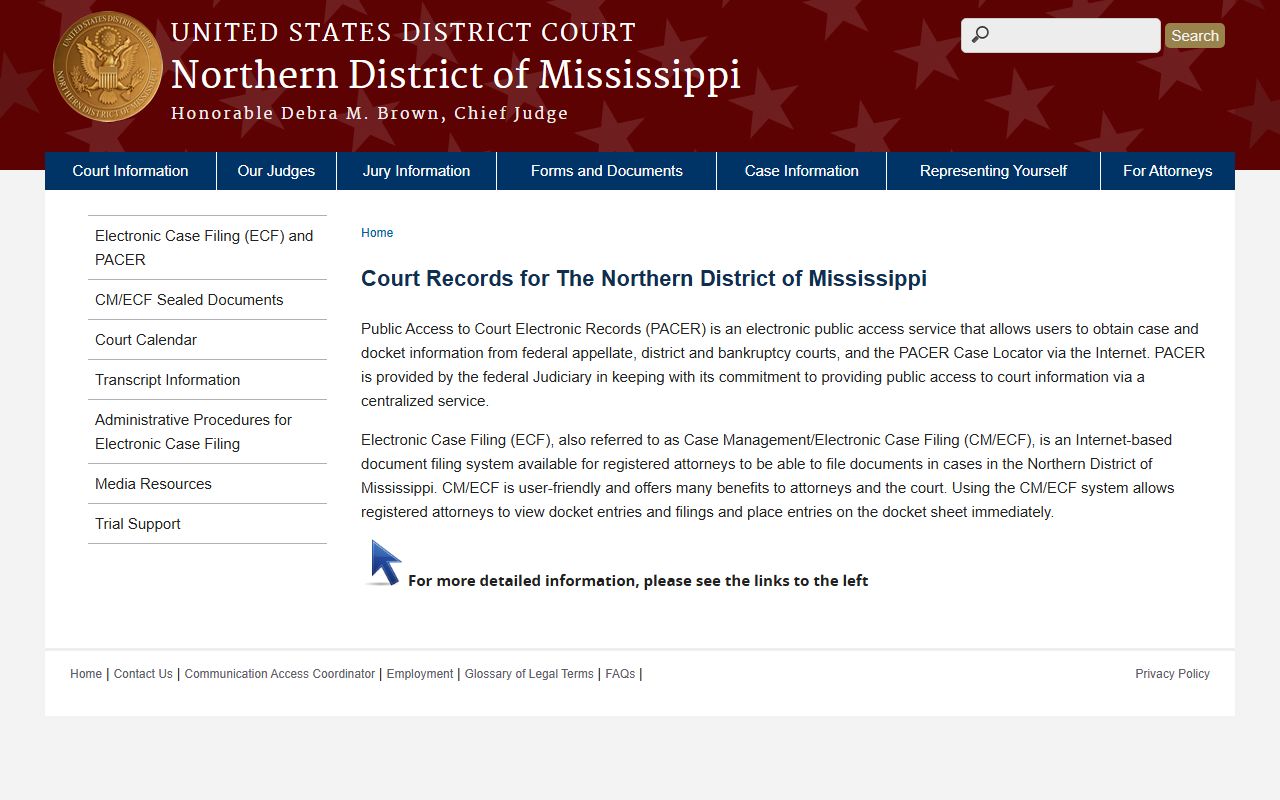
That page explains how PACER access, case numbers, and docket retrieval fit together across the state's federal courts, which mirrors the setup George County's own Southern District uses.
For George County cases specifically, the live docket system is the Southern District's CM/ECF portal, reachable through the Southern District of Mississippi CM/ECF login.
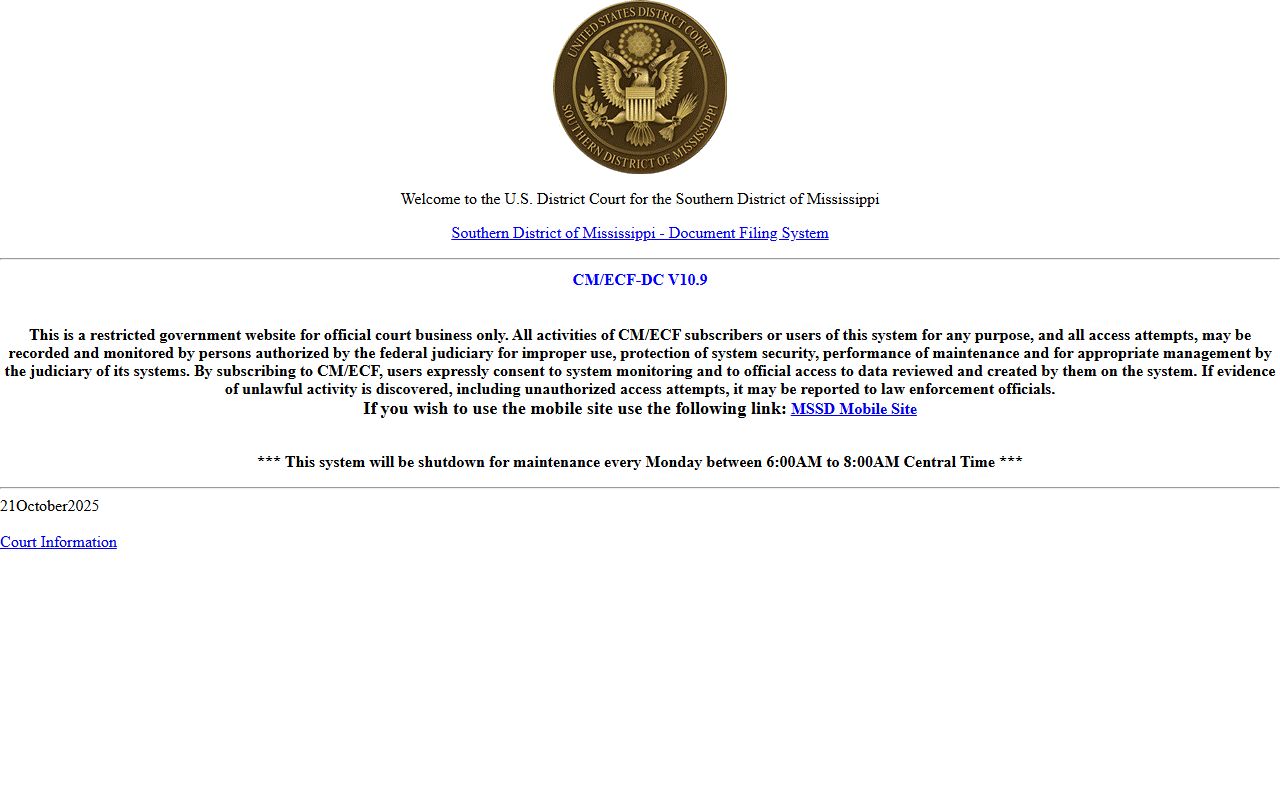
CM/ECF is where attorneys file documents and where dockets are generated, but viewing those dockets as a member of the public runs through a paired account system.
Public docket and document access across federal district, bankruptcy, and appellate courts flows through one service, and the PACER public access portal is where you register for it.
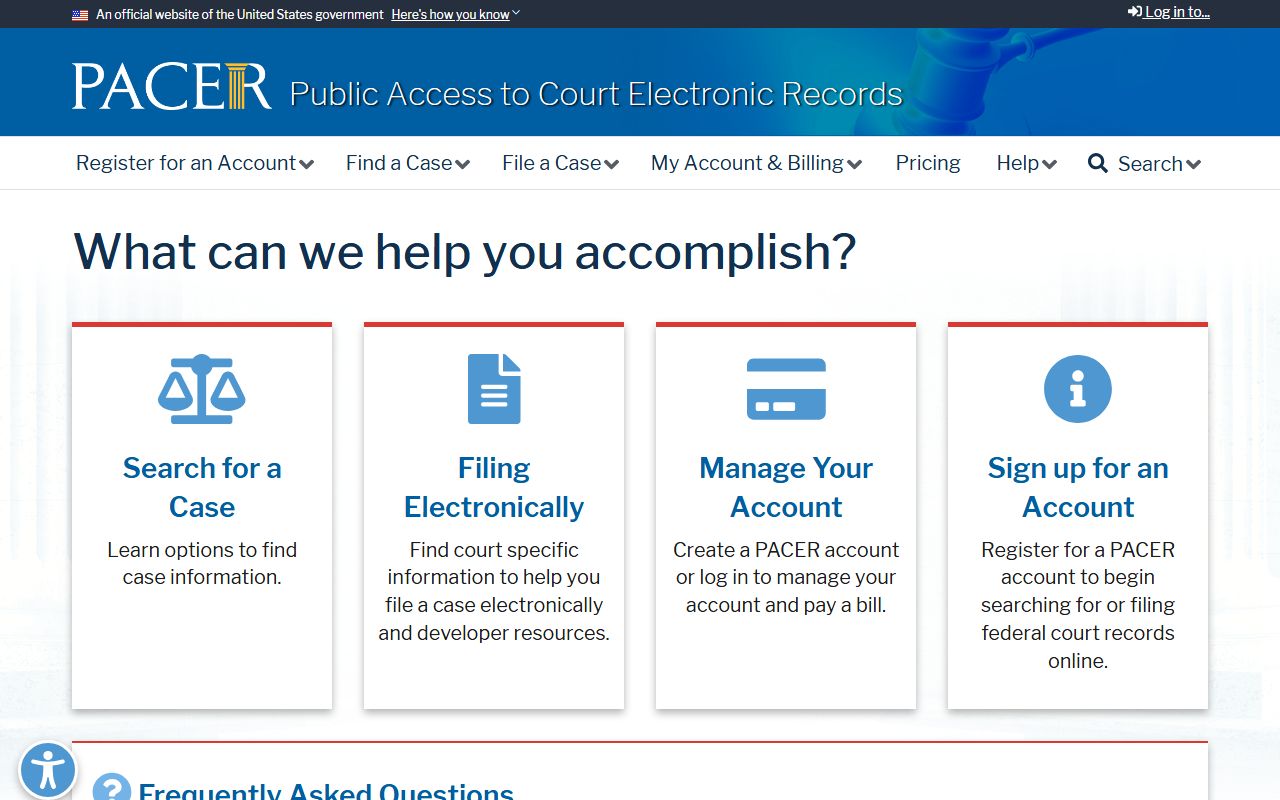
A PACER account is usually required to pull a federal docket or open a filed document, and the same login works for the district, bankruptcy, and Fifth Circuit systems that touch George County matters.
Bankruptcy filings from George County route to their own court, and the U.S. Bankruptcy Court for the Southern District of Mississippi handles those dockets.
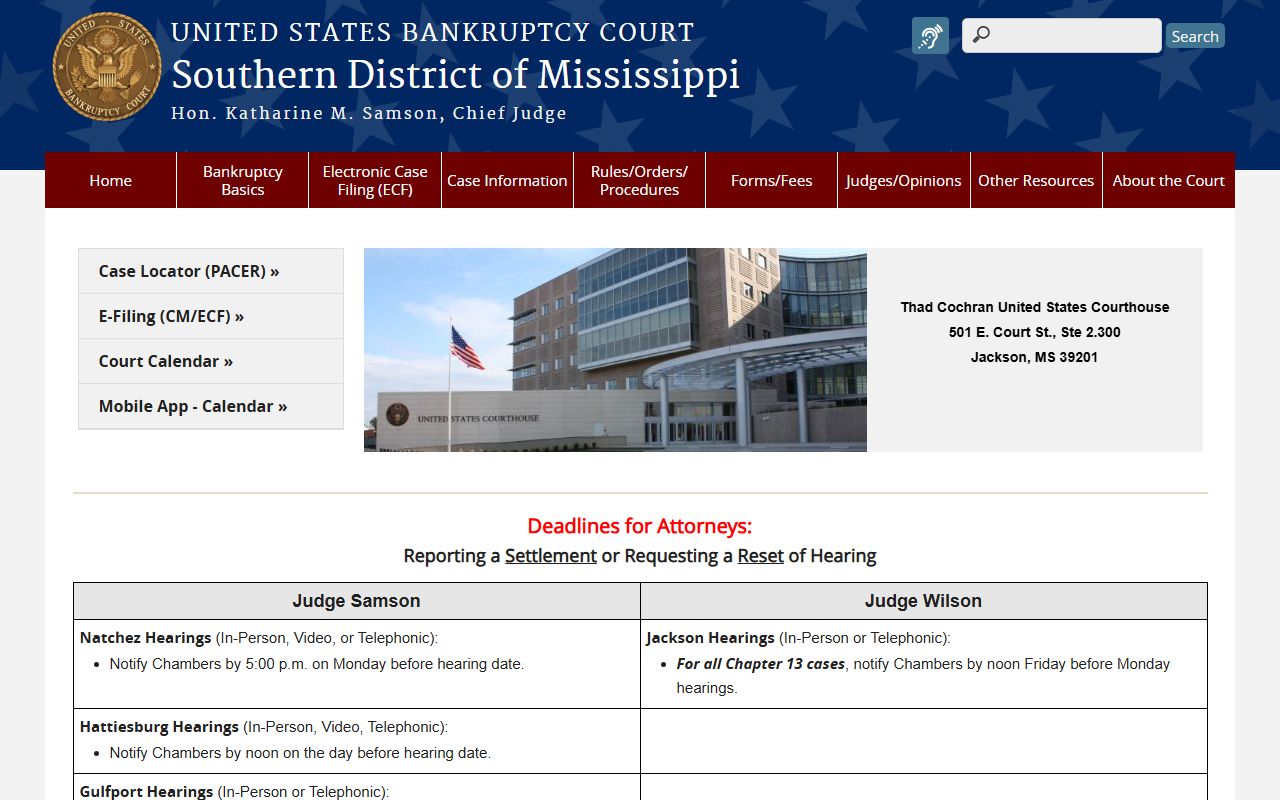
Chapter 7, 11, 12, and 13 cases and adversary proceedings appear on those dockets, which sit apart from both the county courthouse and the regular district civil docket.
When a federal case is appealed, the docket moves up one level, and the U.S. Court of Appeals for the Fifth Circuit hears federal appeals from Mississippi.
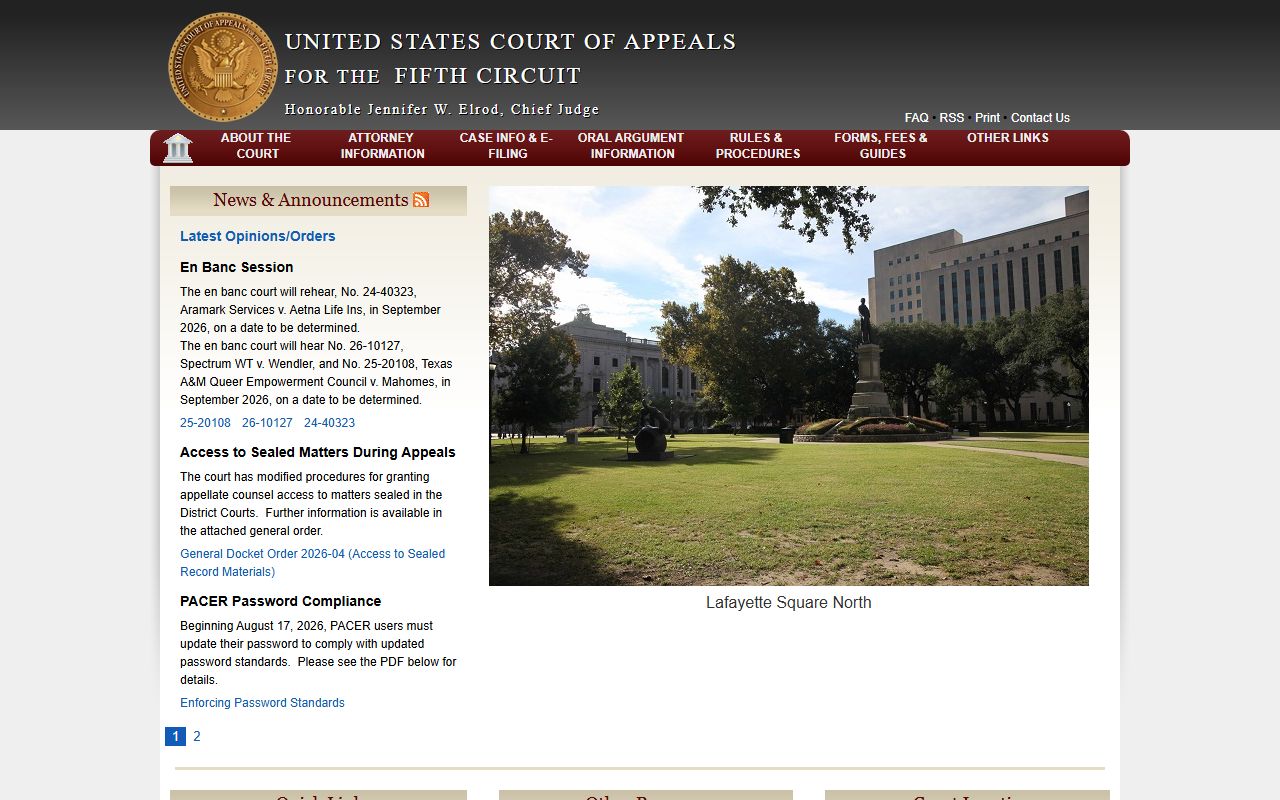
The Fifth Circuit's docket tracks briefs, oral-argument settings, and opinions for appeals that began in the Southern District, again through a PACER-linked account.
For readers who want docket and opinion data without a paid account, a free alternative exists, and CourtListener docket and opinion research collects selected federal and state material.
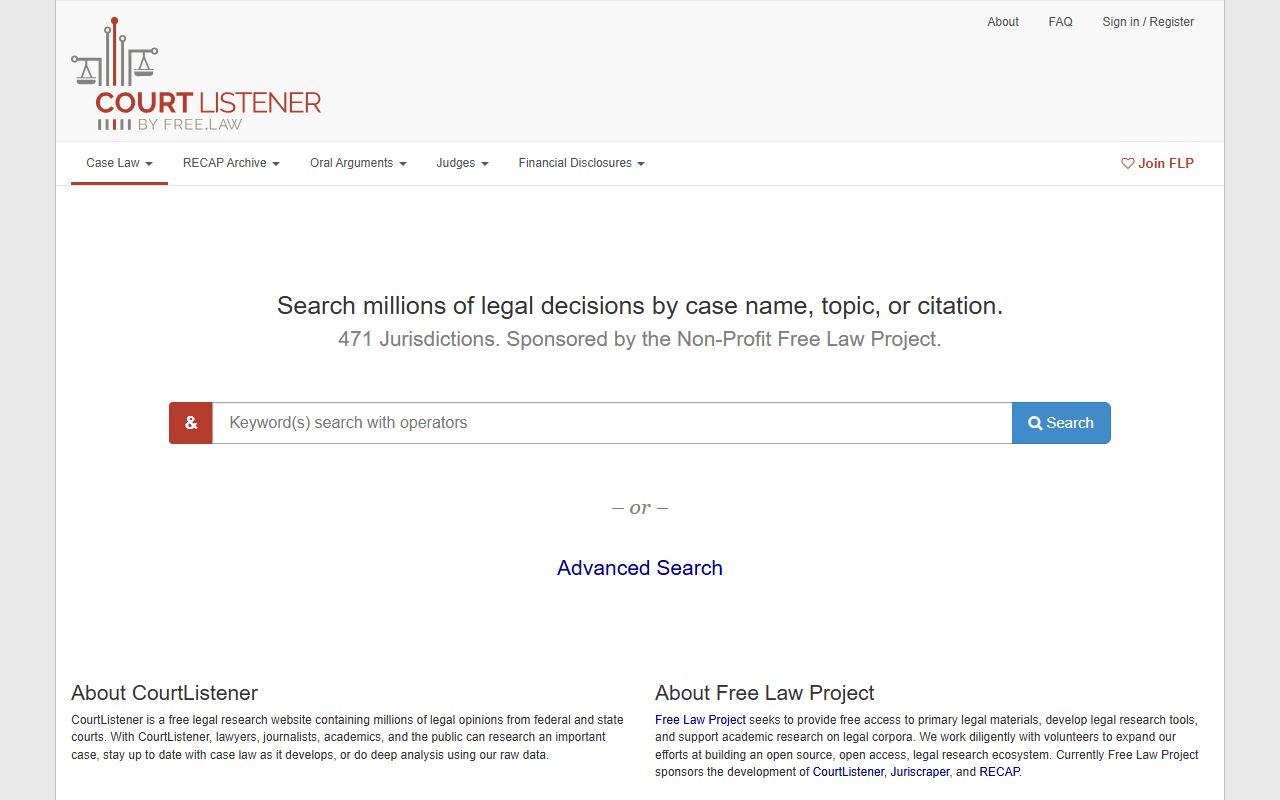
CourtListener is not the official filing system, so a docket there may lag or omit sealed entries, but it is a useful no-cost first look before paying for PACER pulls.
When George County Dockets Are Restricted
Not every docket is open to the public. Mississippi treats court records as available for inspection unless another law makes them confidential, and several George County categories fall under that exception. Youth Court matters involving children under 18, whether delinquency, neglect, or abuse cases, are not ordinary public records.
Adoption files held by the Chancery Clerk are likewise restricted, and sealed or expunged criminal records drop out of ordinary public view once a court grants the order. Mental-health commitments and the drug, alcohol, and mental writs the Chancery Clerk handles carry medical detail and are treated as confidential. Public dockets also redact Social Security numbers, financial account data, and information that identifies a protected minor.
If a record you expect to find does not appear, restriction is one likely reason, and a sealed or expunged matter will not show on a public docket. The clerk who maintains the file can confirm whether a record is confidential or simply held in an office without an online search.